How to Repot a Houseplant: A Simple Step-by-Step Guide
A simple, florist-tested guide to repotting your houseplants — when to do it, the right pot size, and a step-by-step method that gives your plant a fresh burst of growth.
Tommy Kearney
Floral Designer
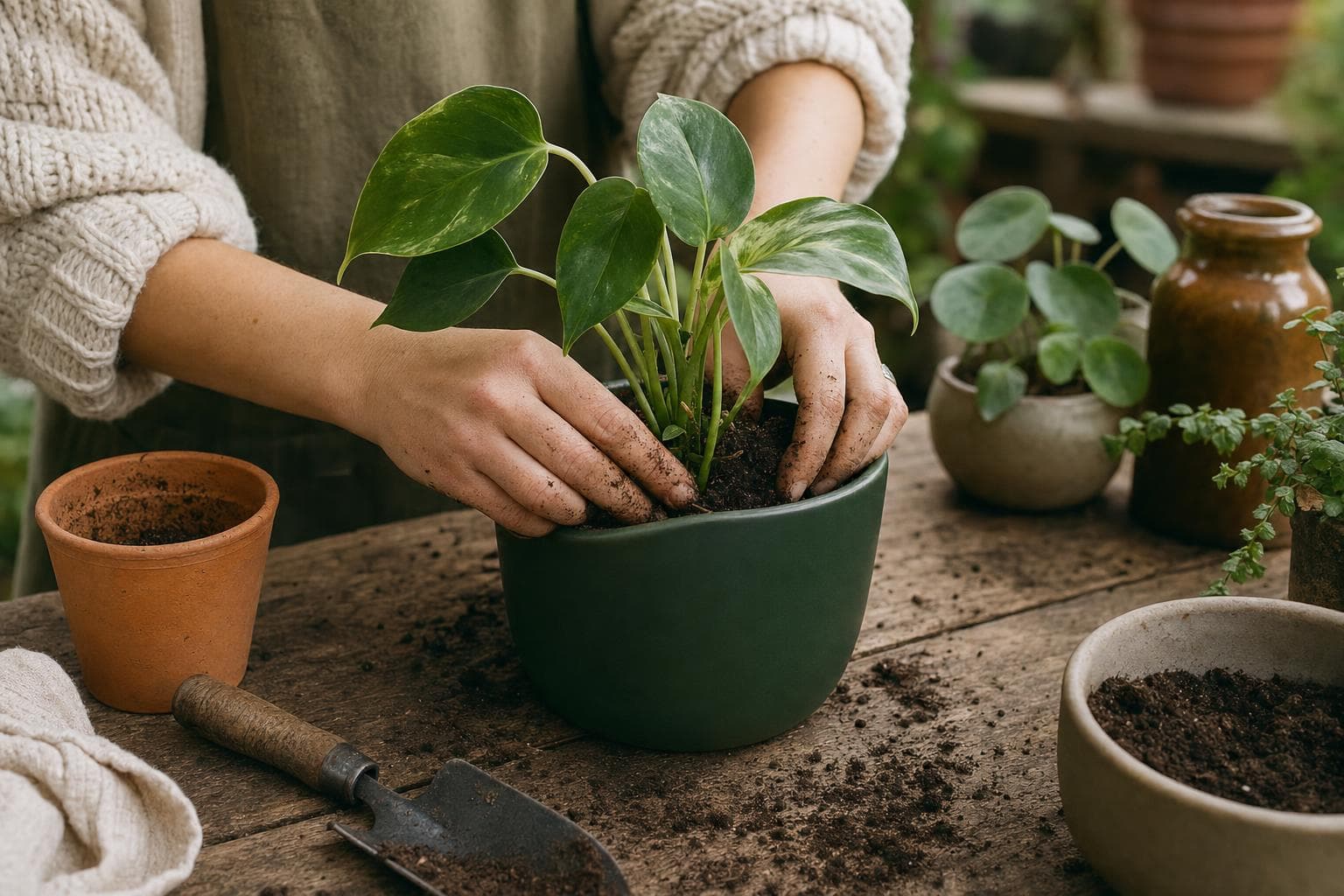
Sooner or later, every houseplant outgrows its pot. Roots start circling the bottom, water runs straight through, and growth slows to a halt. Repotting sounds daunting if you've never done it, but it's one of the simplest and most rewarding jobs in plant care. Get it right and your plant will reward you with a fresh burst of growth.
This guide is for anyone with a houseplant that's looking a little cramped. We repot dozens of plants a week here at Kearney's Gardens, so below is the exact method we use, the signs to watch for, and the mistakes that catch most people out.
The short version:
- Most houseplants need repotting every 1–2 years, usually in spring or early summer.
- Go up just one pot size (2–4cm wider). Too big a pot holds wet soil and rots the roots.
- Always use a pot with a drainage hole and fresh compost.
- Water the day before, tease out the roots, and don't bury the plant deeper than it sat before.
How do you know when a plant needs repotting?
Plants tell you when they're ready. Look for any of these signs:
- Roots growing out of the drainage hole or circling the surface of the compost.
- Water runs straight through the pot without soaking in, because roots have filled the space.
- Growth has stalled even in the growing season, or the plant dries out within a day of watering.
- The plant is top-heavy and tips over, or the pot is visibly bulging.
As a rough rule, most houseplants want repotting every one to two years. Fast growers like a pothos may need it yearly; slow growers like a snake plant can happily sit for three or four years.
When is the best time to repot?
Spring and early summer are ideal, because the plant is actively growing and recovers quickly from the disturbance. In Ireland that usually means April to July. Avoid repotting in the depths of winter when most houseplants are resting, unless the plant is clearly struggling and can't wait.
What you'll need
- A new pot, just one size up (2–4cm wider in diameter) with a drainage hole.
- Fresh houseplant compost (a peat-free mix is kinder to the environment).
- A small trowel or scoop, and a watering can.
- Optional: a handful of grit or perlite to improve drainage for cacti and succulents.
If you're picking a new pot, choose one with a drainage hole every time. A pot without drainage is the single most common reason a freshly repotted plant rots. You'll find a range of pots to suit any plant in our planters and pots collection.
How to repot a houseplant, step by step
1. Water the day before
Give the plant a good drink the day before you repot. Moist roots come away from the pot far more easily than dry ones, and the plant copes better with the move.
2. Ease the plant out
Turn the pot on its side and gently slide the plant out, supporting the base of the stems. If it's stuck, run a knife around the inside edge or squeeze a plastic pot to loosen it. Never yank it out by the stem.
3. Loosen the roots
Tease the outer roots apart with your fingers, especially if they're tightly circled in the shape of the old pot. This encourages them to grow outward into the fresh compost rather than continuing to spiral.
4. Add compost and position the plant
Put a layer of fresh compost in the bottom of the new pot, then sit the plant on top. The aim is for the top of the rootball to sit about 2cm below the rim, at the same depth it grew before. Burying the stem too deep invites rot.
5. Fill, firm and water
Fill around the sides with compost, firming gently as you go so there are no big air pockets, but don't pack it down hard. Water thoroughly until it runs from the drainage hole, then let it settle. Top up with a little more compost if it sinks.
After repotting: what to expect
Keep the plant out of harsh direct sun for a week or two while it settles, and hold off on feeding for about a month, since fresh compost already contains nutrients. Don't be alarmed if the plant looks a little sulky for a few days. That's normal transplant shock, and it usually perks up within a week or two as the roots take hold.
A common mistake to avoid
The biggest error we see is jumping to a much bigger pot to save doing the job again soon. It backfires. A large pot holds far more compost than the roots can drink, so it stays wet for too long and the roots rot. Go up one size only, and you'll have a much happier plant.
Prefer to leave it to us?
Repotting isn't for everyone, and some plants, like a large, well-established specimen, are easier with an extra pair of hands. We offer a repotting service here at Kearney's Gardens in Cloonfad, Co. Roscommon. Bring your plant in, pick a new pot, and we'll do the messy bit for you. Pop in or browse our pots online to get started.
Frequently asked questions
How often should I repot my houseplants?
Most houseplants need repotting every one to two years, ideally in spring or early summer when they're growing actively. Fast growers like pothos may need it yearly, while slow growers such as snake plants can happily stay put for three to four years before they outgrow their pot.
Should I water a plant before or after repotting?
Both. Water the day before so the roots are moist and slide out of the old pot easily, then water thoroughly again straight after repotting to settle the fresh compost around the roots and remove air pockets. Hold off on feeding for about a month afterwards.
What size pot should I move my plant into?
Go up just one size, roughly 2 to 4cm wider in diameter. It's tempting to choose a much bigger pot to save effort later, but a pot that's too large holds wet compost the roots can't use, which leads to root rot. One size up gives roots room without the risk.
Why is my plant drooping after repotting?
A little drooping in the first few days is normal transplant shock as the roots settle into their new home. Keep the plant out of harsh sun, water it in well, and be patient. Most plants recover within one to two weeks. If it keeps declining, check the compost isn't waterlogged.