Wedding Flowers: Planning Your Perfect Day
A florist's practical guide to planning your wedding flowers — what you'll need, when to book, and how to make a seasonal, locally grown budget go further.
Karen Kearney
Floral Designer
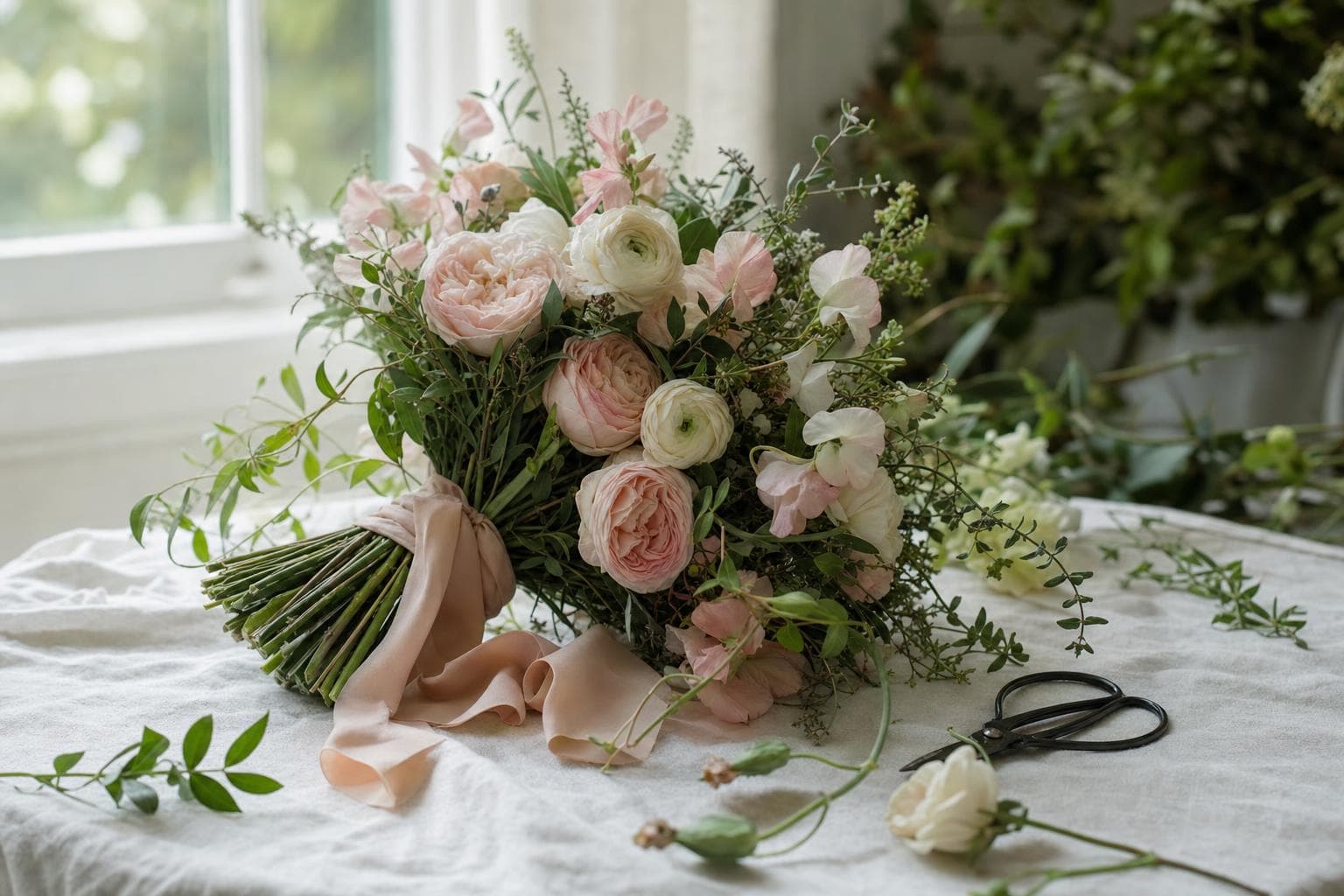
Few details set the tone of a wedding like the flowers. They bring colour, scent and a sense of occasion to everything from the bridal bouquet to the table centrepieces. If you're newly engaged and not sure where to begin, don't worry. Planning your wedding flowers is one of the loveliest parts of the whole process, and a little guidance goes a long way.
This article is for couples planning a wedding in the west of Ireland. We arrange wedding flowers here at Kearney's Gardens, so below is a practical guide to what to think about, when to book, and how to make the most of your budget.
The short version:
- Book your florist 6–12 months ahead, especially for summer weddings.
- Choosing seasonal, locally grown flowers gives the best value and the freshest blooms.
- Decide your five key pieces first: bridal bouquet, bridesmaids, buttonholes, ceremony and reception.
- Bring inspiration photos and your colour palette, then trust your florist to guide the details.
Start with your vision
Before you meet a florist, gather a little inspiration. Save photos you love, note the colours that keep appearing, and think about the overall feel you're after, whether that's wild and natural, soft and romantic, or bold and modern. You don't need every detail worked out. A handful of images and a colour palette give your florist plenty to work with, and they'll help translate your ideas into arrangements that suit your venue and season.
The flowers you'll need
Most weddings come down to five key groups of flowers. Deciding on these first makes everything else easier:
- The bridal bouquet — the centrepiece, and usually where the design starts.
- Bridesmaids' bouquets — smaller versions that complement the bride's.
- Buttonholes and corsages — for the groom, groomsmen, and close family.
- Ceremony flowers — an arch, pedestal arrangements, or aisle markers.
- Reception flowers — table centrepieces, the top table, and the cake.
When should you book your florist?
Sooner than most couples expect. For a summer wedding, aim to book your florist 6 to 12 months in advance, as popular dates fill quickly. Booking early doesn't mean every detail is locked in straight away. It simply secures your date, and you can refine the design as the day gets closer and the seasonal flowers become clearer.
Make your budget work harder
Flowers can be as modest or as lavish as you like. A few simple choices stretch your budget further:
- Choose seasonal flowers. Blooms in season locally are fresher, cheaper and more sustainable than imported alternatives.
- Repurpose arrangements. Move ceremony flowers to the reception so they earn their keep twice.
- Focus on impact. A few statement pieces often do more than lots of small arrangements spread thin.
- Mix in foliage and grasses. Greenery adds volume and movement for a fraction of the cost of blooms.
Think about the season
Ireland's seasons each bring their own palette. Spring offers tulips, daffodils and ranunculus; summer brings peonies, roses and sweet pea; autumn gives dahlias, chrysanthemums and rich foliage; and winter suits anemones, ranunculus and evergreens with berries. Leaning into what's naturally available at your time of year keeps things fresh, seasonal and good value.
Let's plan yours together
Every wedding is different, and the best arrangements come from a proper chat about your day, your venue and what you love. We'd be delighted to help you plan your wedding flowers at Kearney's Gardens in Cloonfad, Co. Roscommon. Take a look at our wedding flowers service, browse our bouquets for inspiration, or get in touch to arrange a consultation.
Frequently asked questions
How far in advance should I book wedding flowers?
Aim to book your florist six to twelve months before the wedding, particularly for popular summer dates which fill up fast. Booking early secures your date; you can still refine the colours, styles and specific flowers closer to the day as seasonal availability becomes clearer.
How can I save money on wedding flowers?
Choose seasonal, locally grown flowers, which are fresher and cheaper than imported blooms. Repurpose ceremony arrangements at the reception, focus your budget on a few statement pieces rather than many small ones, and use foliage and grasses to add volume affordably.
What wedding flowers are in season in Ireland?
Spring brings tulips, daffodils and ranunculus; summer offers peonies, roses and sweet pea; autumn gives dahlias and chrysanthemums with rich foliage; and winter suits anemones, ranunculus and berried evergreens. Choosing seasonal flowers gives the freshest results and the best value.
What flowers do I actually need for a wedding?
Most weddings need five key groups: the bridal bouquet, bridesmaids' bouquets, buttonholes and corsages, ceremony flowers such as an arch or aisle pieces, and reception flowers like table centrepieces. Deciding on these first makes planning the rest of the day's flowers much simpler.